
-
Address: 2/103 Harburg Drive Beenleigh, 4207
Fleet Tyres in Beenleigh for Vans, Utes and Light Trucks
Tyres for working vehicles, chosen by load rating and cost per kilometre, fitted and balanced at $90 per tyre, and managed across the fleet so you never think about them.
A consumer buys a tyre, a fleet buys kilometres. The tyre on a loaded van or a towing ute works harder than any passenger car tyre ever will, and the buying decision changes with it, load rating before brand, pressure discipline before tread pattern, and cost per kilometre before price per tyre. Here is the promise this page makes. We will show you what makes a fleet tyre different, when a working vehicle genuinely needs light truck construction, what the fitting and managing costs, and how a tyre program keeps a whole yard legal, matched and rolling without anyone in your office thinking about rubber. Supplied per size and load rating, fitted, balanced and recorded per vehicle, minutes off the M1 at Harburg Drive.
What are fleet tyres?
Fleet tyres are tyres selected and managed for working vehicles, vans, utes and light trucks, usually in light truck or commercial construction with higher load ratings, run at load matched pressures, rotated on schedule, and tracked per vehicle so the whole fleet stays legal and predictable.
The word fleet describes the management as much as the rubber. Any tyre shop can sell four tyres, a fleet tyre arrangement supplies the right construction for each vehicle’s placard, fits and balances it, records it against the vehicle, rotates it with the services, and flags the replacements before a roadworthy or a blowout does. For the operators already running vehicles with us, MDI Fleets, Down Under Beenleigh and Finger and Fish among them, tyres are simply part of the program, one more thing the workshop watches so the office does not have to.
Do work vans and utes need light truck tyres?
| What differs | Passenger tyre | Light truck (LT) tyre |
|---|---|---|
| Built for | Comfort and grip at light loads | Running at or near full load, all day |
| Casing and sidewall | Lighter carcass, flexible sidewall | Reinforced casing, stiffer sidewall |
| Load index | Matched to car weights | Higher, matched to work weights |
| Operating pressures | Lower, one placard figure covers most use | Higher, with a loaded column that matters |
| Under constant load | Flexes harder, runs hotter, wears early | Holds shape, wears predictably |
| Sidewall on site edges and kerbs | The usual first casualty | Built to take working contact |
| Which to fit | What the placard calls for | What the placard calls for, never less |
The placard on the door pillar is the authority, and we fit to it every time. Not sure what yours calls for? Read us the placard over the phone, 07 3200 2884, and the quote is per size and load rating.
Pressure discipline pays twice
How much do fleet tyres cost?
Straight answer on the parts we control. Fitting and balancing is $90 per tyre here, a wheel alignment is $60 to $99, as at 2026, and the tyres themselves are quoted per size, load rating and brand, because a 195 van tyre and a light truck all terrain are different purchases and pretending one number covers both would be a guess dressed up as a price. The number a fleet should actually watch is cost per kilometre, and it is won or lost after the sale, correct pressures, scheduled rotation and matched pairs routinely add tens of thousands of kilometres across a set. The cheapest tyre on a working vehicle is the one that reaches its full life without failing on the M1 with a load on, and that is a management outcome, not a brand.
The fleet tyre program, what is actually in it
A tyre program is the difference between buying tyres and managing them, and here is exactly what ours includes. Supply quoted per size and load rating across the fleet, fitting and balancing at $90 per tyre, pressures set to the load at every service and rotation, rotation scheduled with the services, matching enforced across every axle, tread measured and recorded per vehicle, replacements flagged and quoted before they are urgent, and the whole history sent with the monthly invoice. The table below lays it out, and it runs on the same fleet account as the servicing, one document a month, records per vehicle, reminders from us.
| What is in the program | How it runs | What it saves you |
|---|---|---|
| Supply per size and load rating | Quoted per vehicle off the placards, brands to suit the duty | No guesswork, no under specified rubber |
| Fitting and balancing, $90 per tyre | Bundled into scheduled services where possible | One trip instead of two |
| Pressures set to the load | Checked at every service and rotation, loaded column applied | Fuel, tread life and stopping distance |
| Rotation on schedule | With every service, matched across axles | The set retires together, not corner by corner |
| Tread measured and recorded | Per vehicle, at every service | Replacements planned, inspections passed |
| Pickup and return | For vehicles that cannot spare a driver | Drivers stay on the run sheet |
| One monthly invoice | Tyres, servicing and records together on the fleet account | One document, per vehicle history attached |
The program runs on the same fleet account as the servicing. Send the fleet list and the placard sizes, and the whole thing is quoted per vehicle.
Rotation, matching and the per vehicle record
Tread, roadworthies and inspections
Fitted at the workshop, managed around your fleet
Tyres for the corridor's working fleet
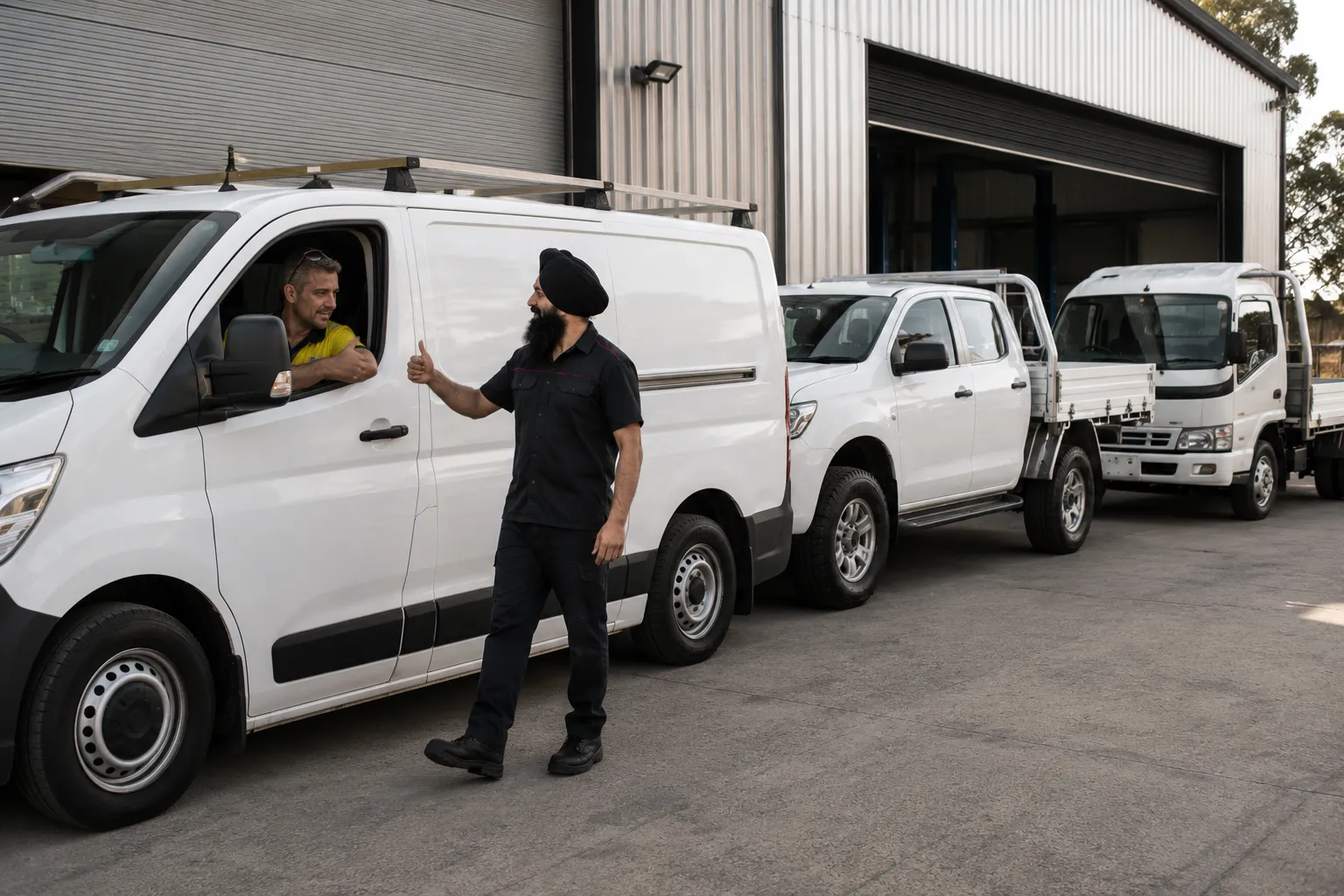
The corridor’s working vehicles are exactly the vehicles this page is written for. The vans running the M1 between depots all day, the dual cabs heading out of the Yatala and Stapylton estates loaded to the axles, the light trucks doing local delivery across Beenleigh, Eagleby and Loganholme, all of them live on their tyres in a way no commuter car does. The workshop sits five minutes off the motorway at Harburg Drive, so the fitting trip is short, the pickup and return loop is shorter, and the fleet spends its time where it belongs, on the road that surrounds us.
Why fleets buy their tyres through Singh
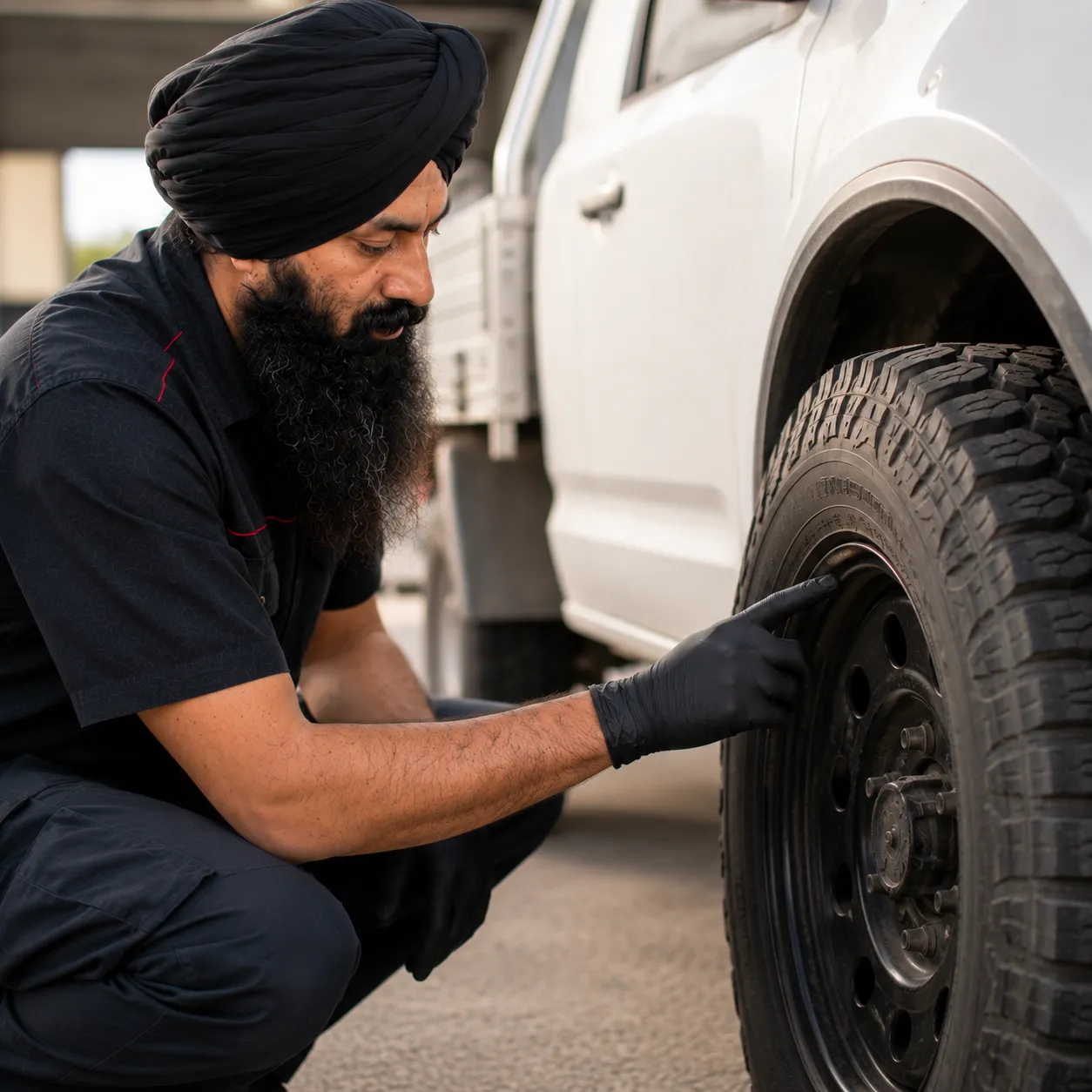
Fleet operators across the corridor put their tyres on our programs because the tyres stop being their problem. We are a 2026 AutoGuru Top Mechanic for Beenleigh with a 4.7 star rating across hundreds of Google reviews.
Light truck and commercial constructions supplied per size and load rating.
Alignment $60 to $99, and the tyres quoted straight, per size.
Checked at every service and rotation, loaded column, not the guess.
One trip, matched across axles, the set retires together.
Measured and recorded, replacements planned before inspections notice.
MDI Fleets, Down Under Beenleigh and Finger and Fish run with us.
Our workmanship backed in writing, brand warranties passed through.
Clear answers in both, on quotes and on the day.


What Beenleigh Businesses Say
Good service plus insuit new Tyres
Excellent service
Great service
ABN 80 607 728 183.
A fleet on managed tyres does not have tyre problems, it has a tyre line item
Fleet Tyre Questions, Answered Straight
What is the difference between light truck and passenger tyres?
The construction. A light truck tyre, marked LT on the sidewall, has a stronger casing, stiffer sidewalls and a higher load index, built to run at or near full load all day, while a passenger tyre is built for comfort at lighter loads. On a loaded work vehicle a passenger tyre flexes harder, runs hotter and wears out sooner, so fit whichever construction the vehicle’s placard calls for.
How much do fleet tyres cost?
Fitting and balancing is $90 per tyre and a wheel alignment is $60 to $99 here, as at 2026, with the tyres themselves quoted per size, load rating and brand. For a fleet the better measure is cost per kilometre, and correct pressures, scheduled rotation and matched axles are what push it down across a set.
Do work vans need commercial tyres?
If the placard calls for a light truck or commercial load rating, yes. The tyre placard on the door pillar lists the size, load and pressure requirements for your vehicle, and fitting below it is unsafe, hard on the tyres, and a problem at inspection time. We fit to the placard, every time.
What pressure should a loaded van or ute run?
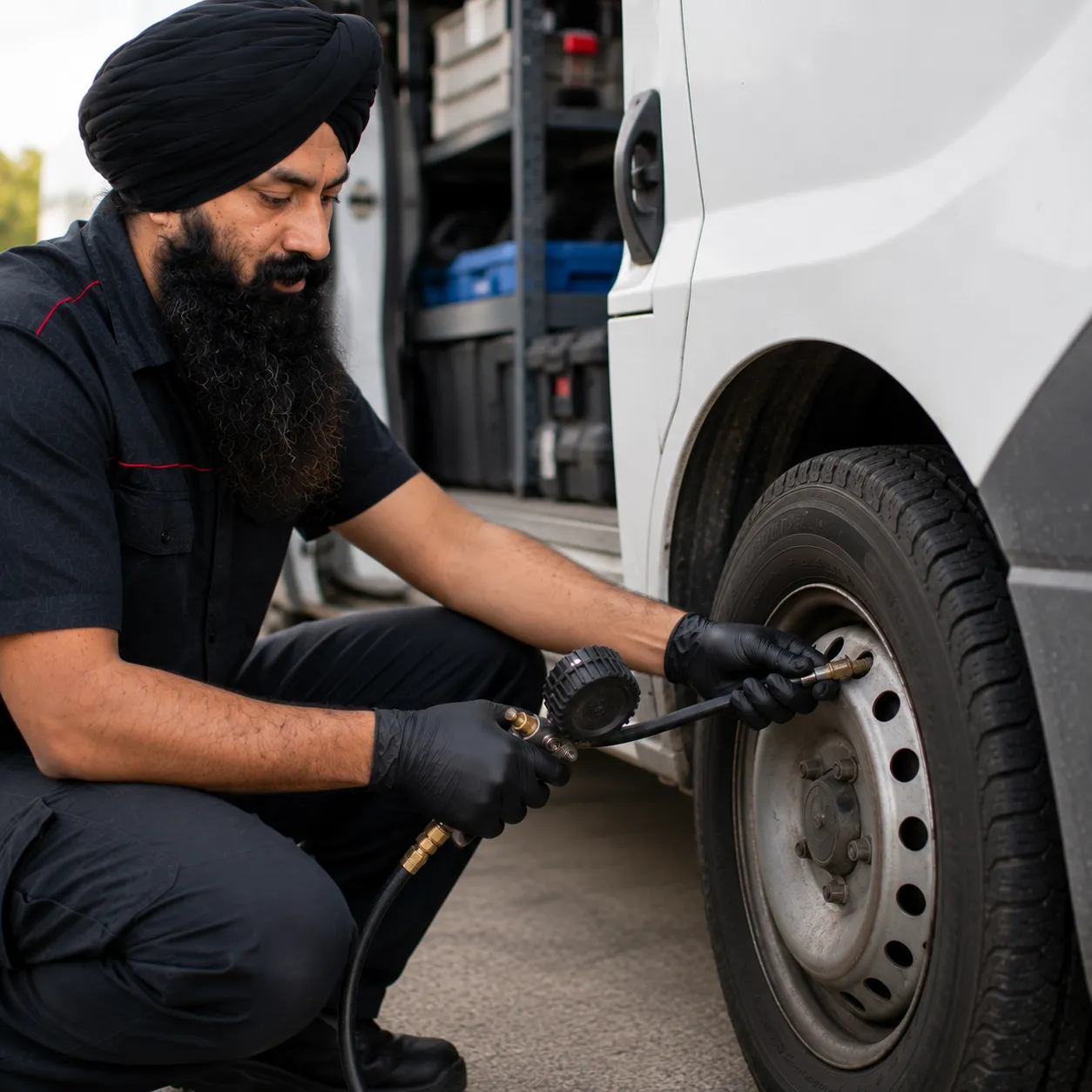
The loaded figure on the tyre placard, which is higher than the unloaded figure most people know. A van that works loaded all week on the unloaded number is effectively under inflated every working day, which lengthens stopping distances, burns fuel and wears the tyres unevenly. On our programs, pressures are set to the load at every service and rotation.
How often should fleet tyres be rotated?
With every service, which for most working vehicles on the severe schedule means roughly every ten thousand kilometres. Working vehicles wear tyres unevenly by nature, and rotation on that rhythm spreads the wear so the set retires together instead of one corner at a time.
When should a fleet replace tyres?
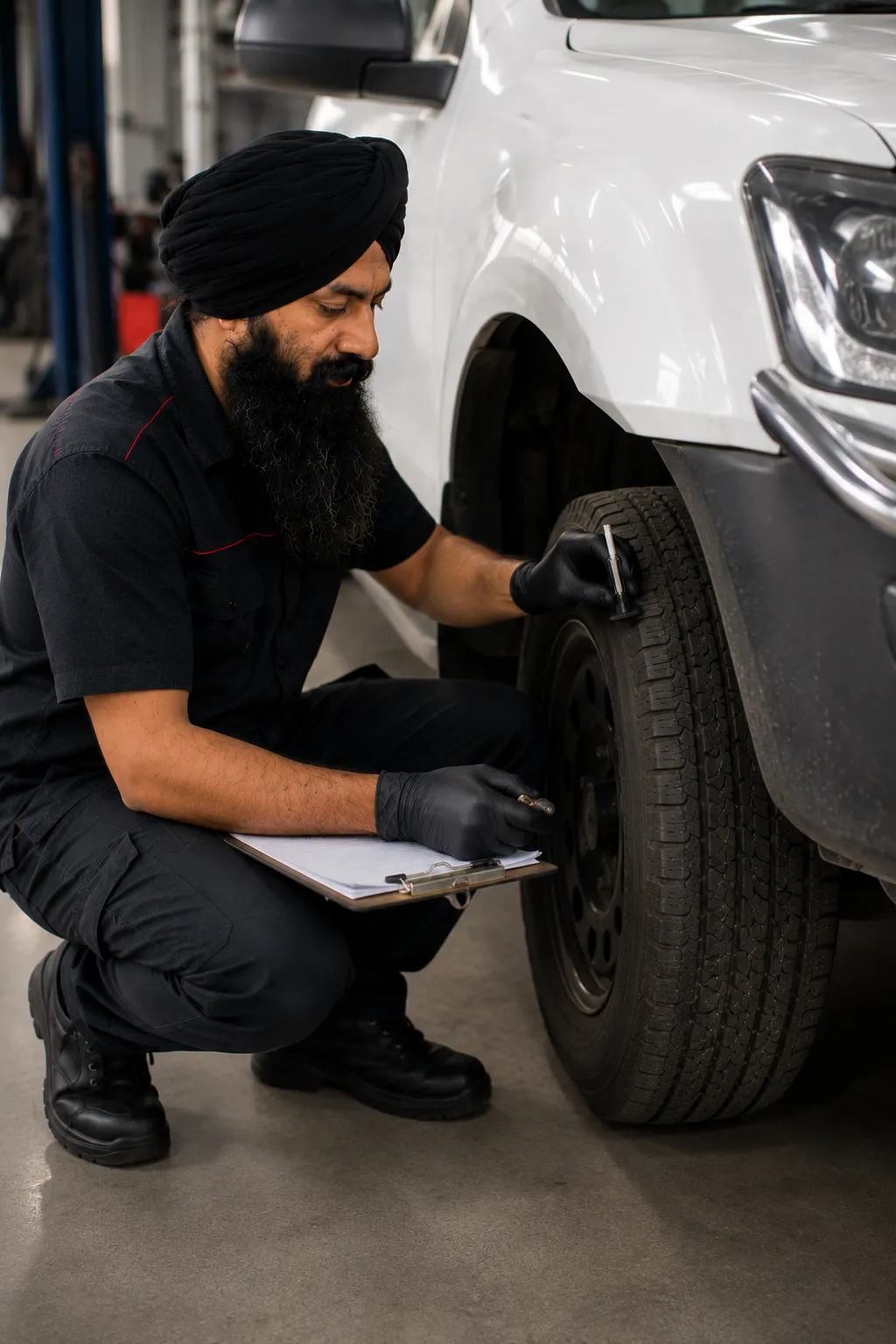
Many fleets set their own replacement point around 3mm of tread rather than running to the legal minimum, because wet braking deteriorates well before the legal floor. On a program, tread is measured and recorded at every service, so replacement is planned from the record months ahead of any inspection.
Can you fit tyres at our yard?
No, and we will not pretend otherwise. Tyre fitting, balancing and alignment need the workshop machines, which do not travel. What we do instead is bundle tyre work into scheduled services, offer pickup and return so your drivers never leave the yard, and turn vehicles around same day, six days a week.
Do the tyres on an axle need to match?
Yes. Tyres paired across an axle should be the same size and construction with comparable wear, because a mismatched axle handles unpredictably under load and braking. Matching is enforced across every axle on our programs, and the per vehicle record is what makes that automatic.
Are tyres checked at roadworthies and COIs?
Yes, and worn tread is the most common tyre reason a vehicle fails. Safety certificates and annual COIs for rideshare and taxi vehicles both include the tyres, so a fleet that measures tread at every service never meets that surprise, the replacement happened months earlier.
Is the tyre work under warranty?
Yes, our fitting, balancing and alignment workmanship carries the 6 month parts and labour warranty in writing, and the tyre manufacturers’ own warranties pass through per brand. Every fitment is recorded against the vehicle, which is also what keeps any warranty conversation simple.
Fleet due for rubber, or one vehicle limping on a worn set?
Get a fleet tyre quote today. Call 07 3200 2884 with the sizes off the placards, or send the fleet list, and the quote comes back per vehicle, supply, fitting and balancing included.
The full fleet offer, accounts, scheduling and the named clients, lives on our fleet servicing page.

Get Expert Repair & Service
We offer complete professional car care service for all your automotive needs.
© Singh Mechanic Workshop and Tyre 2026. All Rights Reserved. Web by Digital Marketers Perth | Revised By Vindas Solutions